Giant Recoups in 10 Weeks: What This Limited Run Teaches Broadway Investors
Ten weeks. That's how long it took Giant, a limited-run play about a fictional luncheon with Roald Dahl, to recoup its entire $5.6 million Broadway investment.
The announcement came May 19, 2026, roughly halfway through the production's 16-week engagement at the Music Box Theatre. For investors, that timeline tells a specific and important story about how limited engagements can work as financial vehicles.
What Recoupment Actually Means
When a Broadway production recoups, it has earned back every dollar invested in mounting the show. That covers:
Pre-production and development expenses
Rehearsal costs and creative fees
Theater rental and technical build-out
Marketing and advertising
Operating losses accumulated during previews and early performances
Broadway investors are first in line to get their money back. Once the show recoups, profits are split according to the terms of the investment agreement — typically with producers taking a larger share of the upside. But recoupment itself is the return of capital. And in an industry where only about 20–25% of shows achieve it, reaching that line is the exception, not the rule.
Giant got there in ten weeks of a sixteen-week run. Here's why that happened.
Why Giant Was Engineered to Recoup
1. A Lean Capitalization
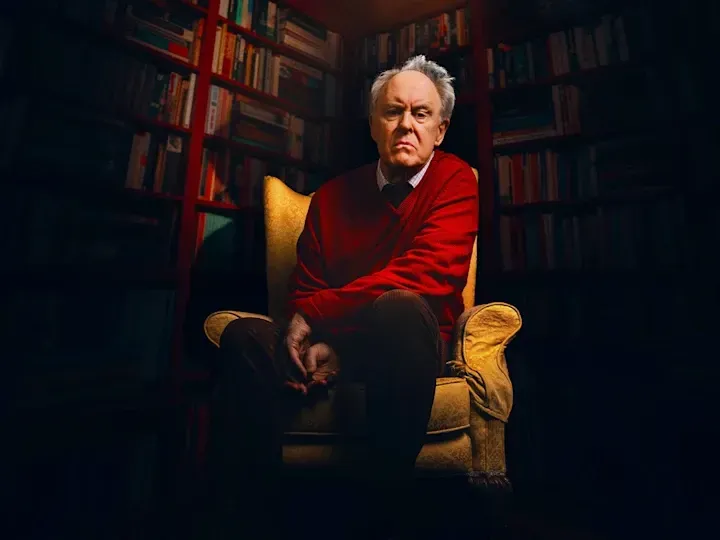
$5.6 million is modest by Broadway standards — particularly for a play of this ambition and pedigree. The capitalization included world-class creative talent: director Nicholas Hytner, scenic and costume designer Bob Crowley, and a cast anchored by John Lithgow. Getting that quality of production at that budget is itself a feat of producing.
Lower capitalization means the recoupment threshold is within reach. A show that needs to earn back $5.6 million faces a fundamentally different climb than one carrying $20 million.
2. The Limited Engagement Model Has Structural Advantages
Giant was always a 16-week run. That's not a limitation — it's a strategy. Limited engagements create scarcity. Scarcity drives urgency. Urgency drives ticket sales.
👉 When audiences know a show is ending, they stop waiting to buy tickets. That behavior shows up directly in weekly box office figures.
A production designed to run 16 weeks doesn't need to sustain box office indefinitely. It needs to sustain it for 16 weeks. That's a more achievable and more predictable target.
3. John Lithgow Is a Known Quantity
Lithgow earned a Tony nomination for Best Lead Actor in a Play and a Drama Desk Award for Outstanding Lead Performance. Those aren't just accolades — they're marketing. Awards recognition in a limited run creates urgency to see the show before it closes. The combination of a deadline and a must-see performance is one of the most reliable box office formulas in Broadway.
4. The Subject Matter Travels
A drama imagining the fallout from Roald Dahl's antisemitic public statements, written by Mark Rosenblatt and presented in partnership with the Royal Court Theatre, is the kind of subject that earns press beyond the usual theater coverage. When a show generates conversation in literary circles, cultural media, and international outlets, that's audience reach a marketing budget alone can't buy.
Four Tony nominations — including Best Play and Best Direction — confirmed that the industry recognized what audiences were responding to.
The Investor's View on Limited Runs
Limited engagements are sometimes treated as lower-profile opportunities compared to shows aiming for open-ended runs. That framing misses something.
A limited engagement has a defined scope. The capitalization is built for a specific number of weeks. The recoupment math is clearer. And when the show overperforms — as Giant did — investors see returns well before the final curtain.
The producers behind Giant, including Brian and Dayna Lee, Robyn Goodman, and the Royal Court Theatre, structured a production that could deliver within its window. That discipline is part of what makes a limited engagement work as an investment.
What This Show Gets Right
Giant recouped because it was designed to. Lean budget. World-class talent calibrated to the scale of the project. A built-in endpoint that created demand. Subject matter with reach beyond the standard Broadway audience. Awards recognition that drove late-run urgency.
Each of those factors was a decision made in the producing process, long before a single performance was sold.
Recoupment on Broadway isn't luck. It's structure. And Giant is a clear example of what that structure looks like when it works.
What matters most to you when looking at a limited engagement as a Broadway investment? Let us know in the comments.
